What can we do to make our City Centre and Dickson cooler and more comfortable as the climate changes?
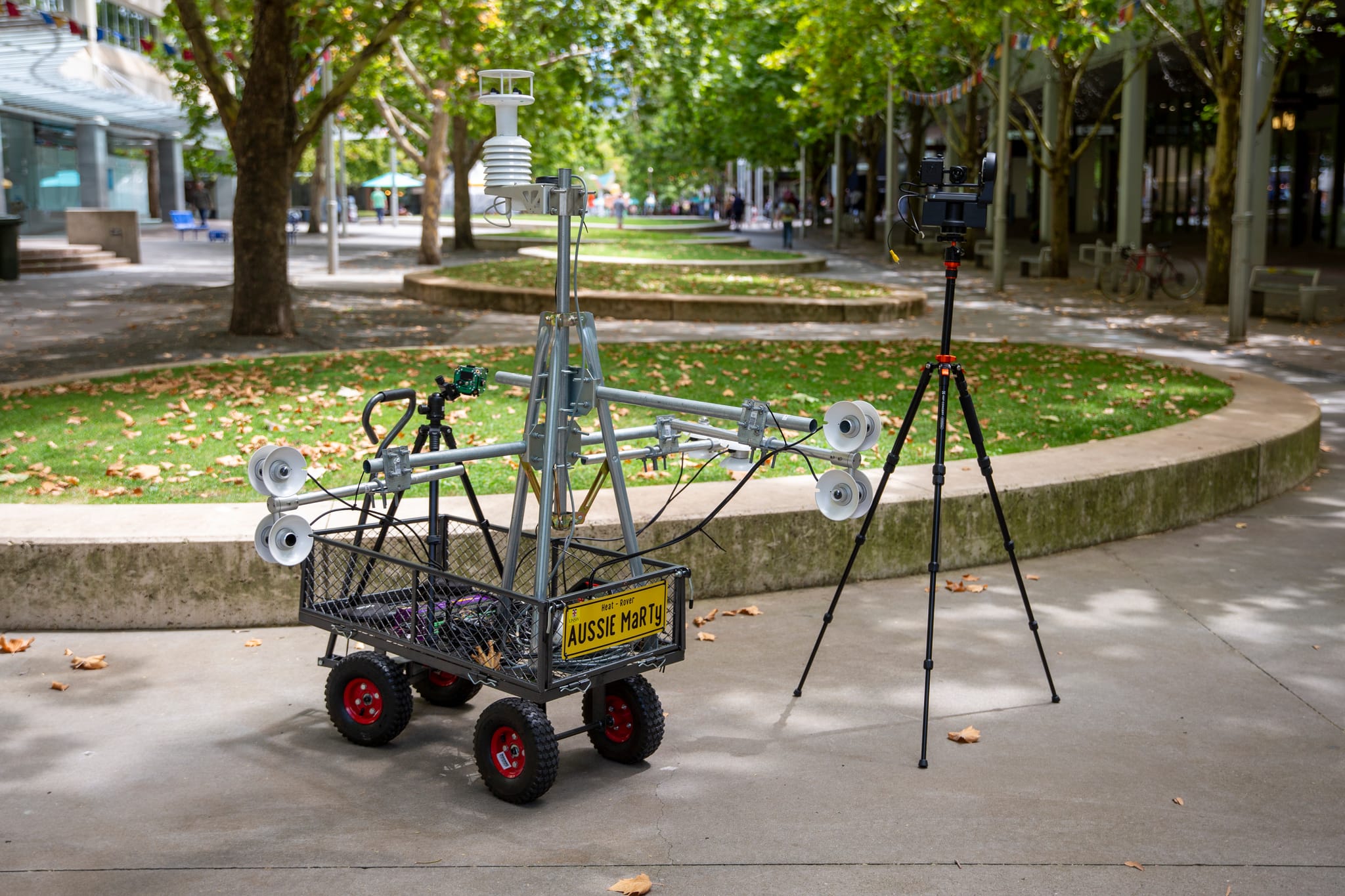
This was the question posed by a City Renewal Authority-commissioned study that used a robot called MaRTy to measure heat and comfort in a city environment – the first time this has been done in Australia.
MaRTy tracked a typical pedestrian journey through places like Civic Square, Ainslie Place, City Walk, Garema Place and the city bus interchange.
In doing so, it simulated how human bodies experience heat. This involved measuring the ‘mean radiant temperature’, which considers the heat emitted from surrounding surfaces like pavement, building walls and even shade awnings (not just the air temperature).
The study has highlighted dramatic differences between places and provided an evidence base to support future renewal activities.
We area already using this data to inform how our City Centre can be made cooler and more pleasant for locals and visitors.
The below outlines the key findings, recommendations and information on how we’re already using the findings in our projects.
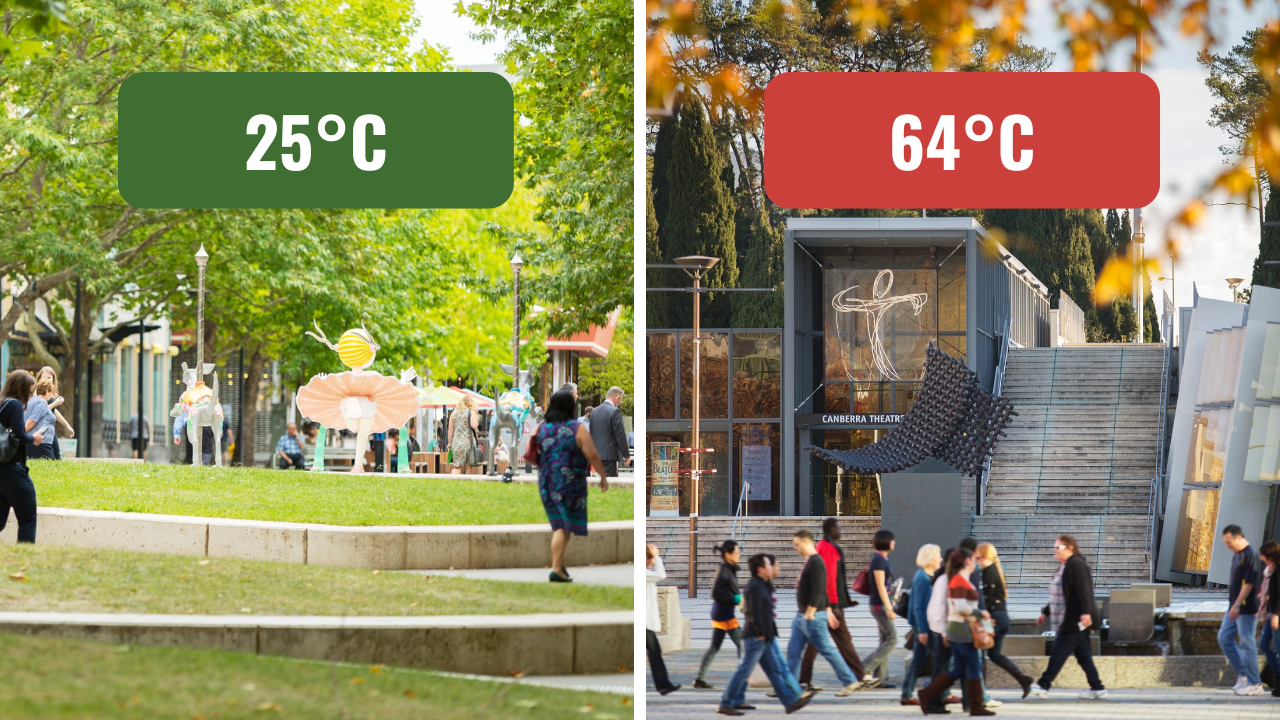
The data shows that heat exposure comes from all sides, especially hot building walls that radiate heat. This was especially evident in Civic Square, which recorded a mean radiant temperature of 64°C on a day in which naturally shaded sites like Garema Place, Petrie Plaza and City Walk reached 25°C (a nearly 40-degree difference). As such, the report suggests that design needs to consider lateral heat, not just direct sunlight from above.
The research identified a significant difference in temperatures between sunny and shaded areas, such as Petrie Plaza and City Walk.
This location saw the mean radiant temperature range from 25°C to 57°C when moving from underneath tree canopies to unshaded zones. This dramatic difference highlights the crucial role deciduous shade trees play in keeping our City Centre cool, as well as the importance of selecting climate-wise trees. Other green infrastructure like water sensitive urban design and green walls are also suggested.
These recommendations align with the Authority’s Sustainability Strategy 2021-25, which is working towards a minimum 30 per cent tree canopy cover across the City Renewal Precinct as part of a broader ACT Government target.
Beyond shade, the study emphasises the importance of material selection. Light-coloured surfaces, low heat-absorbing pavements, and permeable materials all work together to reduce heat gain and create a more comfortable experience.
For example, different types of artificial shade awnings at Dickson shops had a range of effectiveness in lowering the mean radiant temperature. These included:
Further analysis in the report explained that artificial shade is most effective when used to reflect heat away from public spaces and therefore reducing the mean radiant temperature.
In following a typical pedestrian journey throughout the City Centre, the study highlights just how dramatic the changes are in heat and comfort from location to location. For example, a worker passing through Alinga Street on their way to Garema Place for lunch would have experienced a mean radiant temperature of 58°C, before finding some respite under the trees in Garema Place (25°C). They then would have to make the hot and sweaty journey back along Alinga Street to their office.
This highlights the need to focus on the entire user journey to reduce such dramatic changes in heat and comfort. This can be achieved through trees and other plantings, as well as other regularly spaced shaded areas to help people to escape the heat. This is especially important at places where large groups of people gather like bus or light rail stations.
While fountains can provide a welcome perception of coolness, their impact on air temperature is localised. The report suggests that surrounding materials play a role in their effectiveness.
As the below thermal image of the Canberra Times water fountain in Ainslie Place shows, the cooling impact of the water quickly lessons as you move away from the fountain.
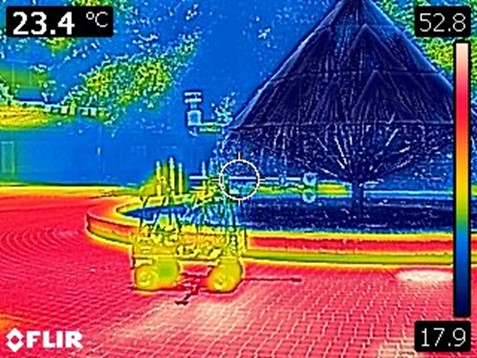
Image: a thermal image showing the cool temperature (blue) quickly becoming hot (red) when you move from the water feature to surrounding paved surfaces.
Despite this, the researchers found that water fountains still improved user perception despite not reducing mean radiant temperature significantly.
The report suggests using features like misting systems for special events or in areas where trees aren’t practical.
The report outlines mean radiant temperature (MRT) and heat stress levels in seven locations across the City Centre and Dickson on a day where the average air temperature ranged from 25.2°C-29.2°C.
The following thermal images of Dickson shops – which had a MRT range of 29°C -62°C – show the various features that have heating or cooling effects, from metal awnings (red) and unshaded paths (red), to concrete walls (yellow) and tree shade (blue/green).
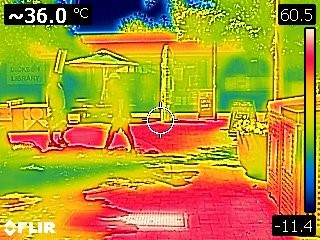
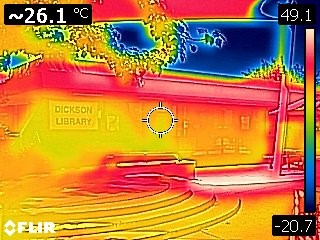
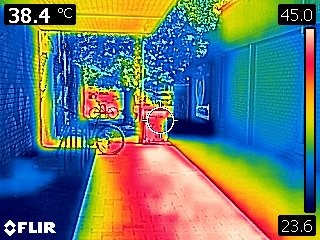
These images and the broader report findings highlight that shading and material selection are both important for reducing heat stress. For example, the awning materials currently in use become hot and provide limited relief. This data will be used to inform the upcoming Dickson shops upgrade and ensure materials that minimise trapped heat.
This report is already informing public space upgrades throughout the City Centre.
For example, the Authority’s upcoming Garema Place upgrade will have larger planted areas and more permeable surfaces in direct response to its findings.
Pavement colour has also been re-considered to minimise the impact on mean radiant temperature and resulting heat stress.
Looking further ahead, the Authority will also consider our responses to development applications in the City Renewal Precinct.
This may include considerations around the radiant (reflected) heat caused by building materials on surroundings, as well as any cooling features like shade, greenery and water bodies.
The Authority’s Design & Place Strategy Executive Branch Manager Lucy Wilson emphasised the importance of data-driven design.
"This Australian-first study that shows how climate-wise design can reduce the temperatures in the urban environment," Ms Wilson said.
“We are already using this data to inform upcoming renewal activities and plan to measure their impact in the coming years through a repeat study.
“The initiative is about delivering sustainable design and development that helps our City Centre adapt to a changing climate and remain a great place to live, work and visit.”
This study was delivered by Mosaic Insights and the Climate-Resilient Cities Lab at UNSW.

We acknowledge the Ngunnawal people as traditional custodians of the ACT and recognise any other people or families with connection to the lands of the ACT and region. We acknowledge and respect their continuing culture and the contribution they make to the life of this city and this region.