
Common Myna
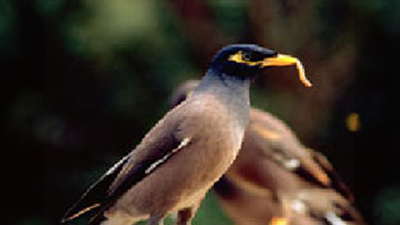
Common (or Indian) Myna are native to open woodlands from across different parts of Asia. They were introduced into Australia in 1862. They were used to control insects in Melbourne and Sydney, and later in North Queensland to combat cane beetles.
The species was introduced to the ACT in 1968. They can be found in ACT woodland reserves but are declining in number in these areas. They are now well-established in almost every Canberra suburb.
Learn how to identify Common Myna.
Living with the Common Myna
Common Myna may eat dog and cat food left outside. This can contribute to increasing Common Myna numbers in urban areas. You can help to reduce Common Myna in your suburb by limiting access to these food sources.
Impacts of the Common Myna
Common Myna may compete with native animals for food and nesting spots. They're smart birds and are known to drive native species (including other birds and mammals) out of their nesting hollows. They’ve been known to destroy the eggs and chicks of these native species.
The aggressive and competitive nature of Common Myna can also lead to a decrease in biodiversity. When native species are pushed out, or their numbers decline, the balance of the ecosystem is disturbed. This can have a ripple effect, negatively affecting other plants and animals that are part of the same habitat.
In the ACT, Common Myna thrive in urban and suburban areas. They're often seen in parks, gardens, and around homes. Their presence in these areas can impact local wildlife that also rely on these spaces. For example, they can take over bird feeders and nesting boxes meant for native species.